Showing posts with label brushing. Show all posts

Monday, March 17, 2014

What's that Word? Dental Jargon from A to Z: D is for Disclosing Tablets, Swabs, and Solution

Disclosing Tablets

Disclosing tablets, solution, and swabs have a dye which is often vegetable dye which stains plaque on the teeth a bright color.  They help patients improve their brushing habits by showing them areas where plaque has not been removed after brushing.  They are used with mirrors to facilitate self-examination.

Disclosing Swabs
Disclosing Swabs

Disclosing tablets, solution, and swabs are sold without a prescription because the vegetable dye is not harmful or painful to the patient.  Some are flavored to improve their taste.

Disclosing Solution and Tablets

It is important to regularly remove all plaque from the surface of the teeth because this accumulation of bacteria on the tooth's surface can build up and harden, becoming tartar/calculus which can only be removed by a dental professional.  Disclosing tablets, solution, and swabs help you see areas where plaque is not removed so it does not mineralize and form tartar/calculus.


After going through your general dental hygiene routine of brushing and flossing, you can use a disclosing product.

  • Plaque Disclosing Tablet: Chew a tablet and swish your saliva around your mouth for approximately 30 seconds.  Spit it out.
  • Plaque Disclosing Swab: Wipe tooth surfaces with the swab.
  • Plaque Disclosing Solution: Swish the solution in your mouth for approximately 30 seconds.  Spit it out.

Pay attention to any instructions on the packet.

Check for the colorful dye, particularly near the gum line, near the surfaces where teeth touch, and behind the teeth, with a small mirror.


If there are stained areas, remove the stained plaque by brushing and flossing.  Note these areas and make sure that you pay attention to them the next time you clean your teeth.  You may wish to use these products several times until you have no stained areas.


This technique is particularly helpful for children or adults who who are learning how to brush/floss or wish to  verify that they are using proper oral hygiene habits.


These products may stain clothing.  They may also stain the mouth for several hours so it is advisable to use them at night.  If you use a dental mirror, run it under warm water to prevent it fogging up in your mouth.  Also, check the ingredients if you have any allergies.


Monday, December 16, 2013

What's that Word? Dental Jargon from A to Z: H is for Halitosis


Halitosis, a symptom of a variety of dental conditions, results in an undesirable odor when a person exhales.  It is also called bad breath.  This can lead to social anxiety and depression since bad breath is a social taboo in many communities.


Bad breath can be a result of eating foods with strong odors like onions and garlic.  Rinsing, brushing, flossing, and using a mouthwash can temporarily mask these odors.  Eating food without a strong odor can easily prevent bad breath if this is the cause.


Bad breath can also be the result of habits or health problems.  Failing to brush and floss regularly and effectively can leave bacteria in the tongue, gums, and teeth.  This can also occur if dental appliances, such as dentures and retainers, are not routinely cleaned thoroughly or do not fit correctly.  The use of tobacco products can also cause bad breath. 


Persistent bad breath can also be a symptom of periodontal (gum) disease, which is caused by plaque buildup on the teeth.  Xerostomia, dry mouth, can also cause bad breath because there is not enough saliva to clear the mouth of dead cells that build up on the tongue and neutralize acid buildup caused by bacteria in the mouth.  Yeast infections in the mouth, dental caries/cavities caused by tooth decay, and respiratory tract infections are among the wide variety of diseases that also cause bad breath.  Many medications can also lead to bad breath. 

If you are concerned about your breath, you should speak with your dental hygienist and dentist.  They may work with a periodontist, a dentist who specializes in the treatment of gums, or a doctor to treat your problem.  Dentists and dental hygienists can also recommend ways to prevent bad breath. 


What Steps Can You Take To Prevent Bad Breath?
  1. Brush twice a day for two minutes with fluoridated toothpaste.  Make sure that you are brushing all surfaces of every tooth.  Also, brush your tongue. 
  2. Floss your teeth twice a day by cupping each tooth with the floss. 
  3. Replace your toothbrush every 3 months or after you are ill.
  4. Rinse your mouth with water or an anti-bacterial mouthwash.
  5. Clean dental appliances, like dentures and retainers, regularly and thoroughly.  Consult your dentist about which products and schedule work best for the particular product.  Clean them before putting them in your mouth if they have been removed.
  6. See your dentist every 6 months for a checkup.  Talk to your dentist if you have any concerns.
  7. Avoid tobacco products.  Consult your dentist and/or doctor to help you do this.
  8. Drink adequate amounts of water each day to keep your mouth moist.  You can also chew sugarless gum with xylitol to increase saliva flow. 
  9. Talk to your dentist about your diet and medications. 


Thursday, June 27, 2013

What's that Word? Dental Jargon from A to Z: S is for Sensitivity


The portion of the tooth that is normally hidden by the gums are not covered by enamel.  When dentin is exposed, it can result in tooth sensitivity as a reaction to exposure to hot or cold foods and beverages.  


What can cause tooth sensitivity?
  • Whitening products
  • Brushing too hard
  • Gingivitis
  • Gum recession
  • Tooth decay around the gum line
  • Grinding
  • Excess plaque
  • Highly acidic food
  • Dental treatments


What can I do to lessen its effects?
  • Talk to your dentist and dental hygienist about identifying the cause of your sensitivity.
  • Brush and floss twice daily
  • Switch to a toothbrush with soft bristles and toothpaste for sensitive teeth
  • Add a dental rinse with fluoride to your dental routine


What's that Word? Dental Jargon from A to Z: T is for Teeth


Let's get down to the basics. 

Why do we have teeth?
Teeth can be used for chewing food, defense, and hunting.  We mainly use them to break down food.

Fun Fact: Chewing is the first step in digestion.  The mechanical motion of chewing as well as the chemical ingredients of saliva, such as salivary amylase, an enzyme that breaks sugars down into starch, and bacteria.  


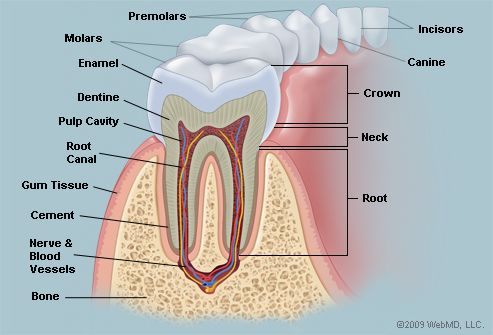
What are the parts of the tooth?
  • Crown: the exposed portion of the tooth covered by enamel that sits above the gumline
  • Root: portion of the tooth that secures it in place in the gum tissue and bone
  • Enamel: hard covering of the crown that protects the dentine
  • Dentine: living supportive part of tooth that has some nerves
  • Pulp: tooth center which houses many nerves and blood vessels; part of the tooth that receives nourishment
  • Cement: covers root and attaches tooth to the bones of the jaw


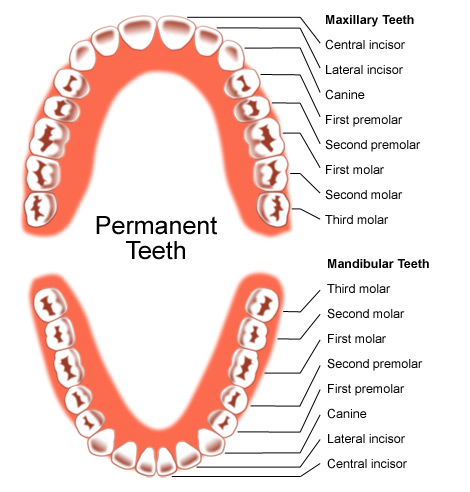
Since humans eat a mixture of meat and plant products, our teeth have incisors, canines, pre-molars, and molars.  Paleontologists can determine a skeleton or fossil's species and eating habits  by examining its teeth.


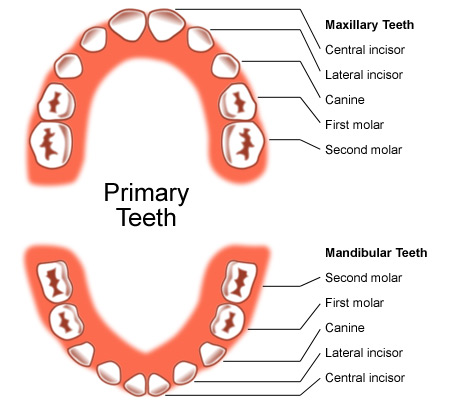
We are diphyodonts.  This means that we have two distinct sets of teeth.  The first set is known as deciduous, baby, milk, or primary teeth.  These teeth typically emerge during infancy and are replaced by permanent adult teeth.  We typically have 20 teeth as children and 32 as adults.


Fun Fact: Walrus tusks are actually canines!  These teeth grow continuously throughout the life of the walrus.


Sunday, May 26, 2013

National Smile Month


We're in the middle of National Smile Month!  Get the kids involved with fun.  They have a few fun games including a dental themed Shoots and Ladders, rhymes, and recipes.  Find them at: http://www.bda.org/Images/children-oralhealth-slideshow.pdf

Below is an infographic from their website


What's that Word? Dental Jargon from A to Z: W is for Whitening


Whitening is a treatment where a dentist uses a solution to increase the brightness of teeth.

Whitening regimens should always be supervised by a licensed dentist.  Talk about whitening with your dentist and dental hygienist before you begin the process. 

It's also important to set whitening goals so you don't go overboard and damage the enamel of your teeth. 

Whitening toothpastes, which are more abrasive than normal toothpastes, should not be used by anyone with sensitive teeth.  If you develop sensitivity, whitening might not be for you.

What about whitening without using whitening products?
1.) Try drinking less coffee and tea.
2.) Drink anything that isn't water with a straw. 
3.) Brushing and flossing regularly can help you maintain a pearly white smile.
4.) Adding ingredients such as baking soda to your dental regimen can whiten your teeth.


Saturday, April 20, 2013

What's that Word? Dental Jargon from A to Z: X is for Xerostomia

Xerostomia, dry mouth, is caused by a variety of conditions, including the use of medication, dehydration,  the consumption of certain foods, and autoimmune disorders.

When your mouth is dry, your saliva flow decreases and you are more prone to decay. 


What can YOU do?
  1. Discuss all medications you are taking with your dentist.  Some medicines have a tendency to dry your mouth.  
  2. Try sugar-free gum.
  3. Drink water frequently.  If you are thirsty, it's a sign that you are past the point where you needed to drink.   Try putting a few water bottles in your car and near the area where you work.  
  4. Avoid soda and sugary drinks.  Stick to water, milk, and fruit juice.  
  5. Use an oral rinse without alcohol.
  6. Brush and floss frequently.
  7. Drink fluoridated water.


Causes of Xerostomia:
  1. Medications
  2. Dehydration
  3. Cancer Treatments
  4. Tobacco Use
  5. Sleeping with an open mouth
  6. Snoring
  7. Diabetes
  8. Anxiety
  9. HIV/AIDS
  10. Parkinson's Disease
  11. Autoimmune disorders