Showing posts with label tips. Show all posts

Thursday, March 27, 2014

What's that Word? Dental Jargon from A to Z: O is for Occlusion

Occlusion is the manner in which upper (maxillary) and lower (mandibular) teeth contact and rest on one another when they are brought together to close the mouth or chew, commonly called bite.


Dynamic occlusion, or articulation, is the occlusion when there is jaw movement.  This includes when you are eating.  Static occlusion is occlusion when the jaw is closed and is not moving.

Dynamic Occlusion
Static Occlusion

When there is improper contact resulting in misalignment, it is called malocclusion.  Malocclusion is associated with a variety of problems.


Both genetic variation and environmental factors affect occlusion and can result in malocclusion, since bone structure and the size, shape, and location of teeth vary between people.  Tumors, impacted teeth, pacifier use, improperly fitted oral appliances, wear/abrasion, restorative treatments (such as braces, fillings, invisalign, and crowns), breathing though the mouth, biting on nails or other objects, thumb sucking, and injury can also lead to malocclusion.
As a person ages and develops, their occlusion may change.  Remember that many infants are born without teeth, baby teeth erupt and are gradually replaced by permanent teeth.  All teeth are subject to wear and infection.  People may also have supernumerary (more than a normal number of) teeth, may be missing teeth, or may have large, small, or loose teeth, which may lead to malocclusion.


Malocclusion should be treated by a dentist.  A dentist will be able to evaluate a patient and check for malocclusion.

Saturday, June 29, 2013

What's that Word? Dental Jargon from A to Z: C is for Calculus & P is for Plaque, Periodontitis & G is for Gum Disease, Gingivitis

Dental plaque is a light yellow substance formed when bacteria in the mouth attach to teeth. 
Microorganisms that attach to their surface can remain in place for long periods of time. Approximately 1,000 species of bacteria can form biofilms on the teeth.  


Dental plaque can be easily removed during the early stages of its formation.  It is mineralized into tartar (also known as calculus) after approximately 10 days.  


Calculus is dark yellow hardened plaque which has hardened so it cannot be removed with a toothbrush.  It can only be removed with professional dental tools.


Plaque can contribute to tooth decay (cavity formation) and gum disease (gingivitis and periodontitis).  


Thursday, June 27, 2013

What's that Word? Dental Jargon from A to Z: R is for Root Canal


The mere mention of the phrase root canal leaves many Americans quivering in fear.  It's the most stereotypically feared dental treatment.


Whether performed by a general dentist or an endodontist, a root canal is performed to remove infected tissue such as nerve tissues and blood vessels from the pulp of the tooth and seal it against future infections.  Files and irrigating solutions are used extensively in this process.

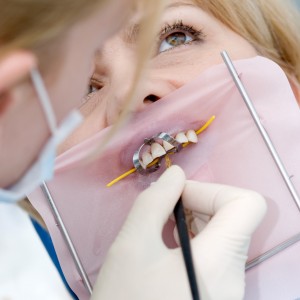
Rubber Dam


How is this done?  First, the dentist takes x-rays to identify infected areas. Then, the area is numbed and a rubber dam is placed on the tooth to keep it dry and bacteria-free. The rubber dam also prevents bacteria from the infected tooth from being transferred to other parts of the mouth. Afterwards, a hole is drilled into the tooth and bacteria is removed from the tooth. It is then cleaned with root canal files, which reach into the tooth and clean and scrape the sides of the root canals.  Sodium hypochlorite or water is then used to clear any debris.  To seal the tooth, it is filled and closed with a crown following the root canal.

The procedure normally takes approximately one hour.


Why is a root canal sometimes performed by an endodontist?

  • Endodontists complete several years of focused additional studies following the completion of a four year program in general dentistry.  This enables them to diagnose and treat complex cases and teeth which have had a past root canal.  
  • If your case requires an endodontist, your general dentist will refer you to one during your normal cleaning appointment.  Feel free to also consult ratings guides before choosing an endodontist.  
Fun Fact: We are not the only species that gets root canals.  

Hati the tiger, of the Miami Zoo, getting a root canal

Sunday, May 26, 2013

National Smile Month


We're in the middle of National Smile Month!  Get the kids involved with fun.  They have a few fun games including a dental themed Shoots and Ladders, rhymes, and recipes.  Find them at: http://www.bda.org/Images/children-oralhealth-slideshow.pdf

Below is an infographic from their website


What's that Word? Dental Jargon from A to Z: V is for Veneer

Dental veneers are composite or porcelain layers that are overlain onto a tooth in order to improve the tooth's appearance.  They can lengthen and whiten teeth, making them appear straight, young, and healthy.  Veneers can result in dramatic dental transformations or the correction of the appearance of dark spaces following gum recession or the changes that result from a fractured or misaligned tooth.


Dentist Charles Pincus created the first veneers, which were used by actors to temporarily enhanced the appearance of their teeth.  They were secured using denture adhesive.  Now, they last for years and are more permanently attached to the enamel.


Now, both porcelain and composite materials are used to create veneers.  In choosing which compound to use, patients should evaluate the life of the material, the whiteness they wish to achieve, and how much dentition is lost by bonding the veneer.  Composite veneers can be fitted in a single visit to the dentist.  Porcelain veneers are more durable than composite veneers although they require the removal of less natural enamel.  They can last 10-15 years.  They also create a more natural look and are more stain-resistant.  Unfortunately, porcelain veneers can only be created in a dental lab, requiring multiple visits to the dentist.  They are more expensive because porcelain is a more expensive material and the process of putting porcelain veneers into the mouth is more time-consuming.


The use of veneers can result in the destruction of a significant amount of enamel so they are not recommended for young patients or patients with minor aesthetic concerns.


Saturday, April 20, 2013

What's that Word? Dental Jargon from A to Z: X is for Xerostomia

Xerostomia, dry mouth, is caused by a variety of conditions, including the use of medication, dehydration,  the consumption of certain foods, and autoimmune disorders.

When your mouth is dry, your saliva flow decreases and you are more prone to decay. 


What can YOU do?
  1. Discuss all medications you are taking with your dentist.  Some medicines have a tendency to dry your mouth.  
  2. Try sugar-free gum.
  3. Drink water frequently.  If you are thirsty, it's a sign that you are past the point where you needed to drink.   Try putting a few water bottles in your car and near the area where you work.  
  4. Avoid soda and sugary drinks.  Stick to water, milk, and fruit juice.  
  5. Use an oral rinse without alcohol.
  6. Brush and floss frequently.
  7. Drink fluoridated water.


Causes of Xerostomia:
  1. Medications
  2. Dehydration
  3. Cancer Treatments
  4. Tobacco Use
  5. Sleeping with an open mouth
  6. Snoring
  7. Diabetes
  8. Anxiety
  9. HIV/AIDS
  10. Parkinson's Disease
  11. Autoimmune disorders

Thursday, April 18, 2013

Oral Cancer Awareness Month


Oral Cancer by the Numbers:
According to the Oral Cancer Foundation: 
  • There will be 42,000 oral cancer diagnoses this year.
  • There are 100 new diagnoses each day.
  • One person loses their battle with oral cancer every hour.
Early detection is vital.
  • Making a late diagnosis drops the oral cancer survival rate from 80-90% to 43%.
Oral cancer has 3 causes:
  1. Alcohol and drug use
  2. HPV-16
  3. Unknown causes (likely genetic predisposition)


CDC: Terrie's Story

The CDC posted enlightening videos about the dangers of smoking featuring Terrie, a woman who smoked from the age of 13 and was diagnosed with oral cancer.

Warning: The content may be considered visually disturbing by some viewers.  Viewer discretion is advised.


Video One: Terrie, What are you doing?


Video Two: Tips from former smokers: Terrie's ad

National Smile Month


Let's join the British as they celebrate National Smile Month from May 20 - June 20, as they promote oral health!

The organizers of the National Smile Month posted a cute Healthy Teeth Song and activities for kids.  Don't forget to help them learn more about dental health with games on http://dentalbuddy.org/

The adults may be more interested in their helpful dental information cards.

Check them out!

http://www.nationalsmilemonth.org/

Daily Dozen: Today's Top Twelve Dental Images


"