Wednesday, August 28, 2013

What's that Word? Dental Jargon from A to Z: I is for Implant


A dental implant is a restoration in which a missing tooth is replaced with a support structure which is inserted into the bone, similar to the root of a natural tooth.  The post, with time, undergoes osseointegration, forming a connection with the bone.  Dental implants are often made of titanium.  They are connected to abutments which support prostheses such as crowns. 


Dental implants can be used to replace a single tooth, multiple teeth, or support a denture.  Implants provide support to dental restorations.


What is the difference between a dental implant and bridge?

An implant is inserted into the dental alveolus (socket in the bone which holds the tooth).  When only one tooth is missing, it simulates the placement of a single tooth.  A dental implant is a replacement for a natural tooth.  A dental bridge is attached to surrounding natural teeth after they are filed, which results in the loss of natural tooth structure. When possible, many dentists advise patients to maintain the maximum amount of natural tooth structure.  Bridges and implants also differ in cost.  

implant restoration three-unit fixed bridge

Sunday, June 30, 2013

Saturday, June 29, 2013

What's that Word? Dental Jargon from A to Z: C is for Calculus & P is for Plaque, Periodontitis & G is for Gum Disease, Gingivitis

Dental plaque is a light yellow substance formed when bacteria in the mouth attach to teeth. 
Microorganisms that attach to their surface can remain in place for long periods of time. Approximately 1,000 species of bacteria can form biofilms on the teeth.  


Dental plaque can be easily removed during the early stages of its formation.  It is mineralized into tartar (also known as calculus) after approximately 10 days.  


Calculus is dark yellow hardened plaque which has hardened so it cannot be removed with a toothbrush.  It can only be removed with professional dental tools.


Plaque can contribute to tooth decay (cavity formation) and gum disease (gingivitis and periodontitis).  


Thursday, June 27, 2013

What's that Word? Dental Jargon from A to Z: R is for Root Canal


The mere mention of the phrase root canal leaves many Americans quivering in fear.  It's the most stereotypically feared dental treatment.


Whether performed by a general dentist or an endodontist, a root canal is performed to remove infected tissue such as nerve tissues and blood vessels from the pulp of the tooth and seal it against future infections.  Files and irrigating solutions are used extensively in this process.

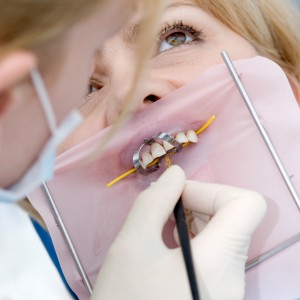
Rubber Dam


How is this done?  First, the dentist takes x-rays to identify infected areas. Then, the area is numbed and a rubber dam is placed on the tooth to keep it dry and bacteria-free. The rubber dam also prevents bacteria from the infected tooth from being transferred to other parts of the mouth. Afterwards, a hole is drilled into the tooth and bacteria is removed from the tooth. It is then cleaned with root canal files, which reach into the tooth and clean and scrape the sides of the root canals.  Sodium hypochlorite or water is then used to clear any debris.  To seal the tooth, it is filled and closed with a crown following the root canal.

The procedure normally takes approximately one hour.


Why is a root canal sometimes performed by an endodontist?

  • Endodontists complete several years of focused additional studies following the completion of a four year program in general dentistry.  This enables them to diagnose and treat complex cases and teeth which have had a past root canal.  
  • If your case requires an endodontist, your general dentist will refer you to one during your normal cleaning appointment.  Feel free to also consult ratings guides before choosing an endodontist.  
Fun Fact: We are not the only species that gets root canals.  

Hati the tiger, of the Miami Zoo, getting a root canal

The Daily Grind: I Am a Female Dentist

Check out Dr. Colleen B. DeLacy's great piece on gender roles in a dental clinic.  As a female dentist, she has a great perspective on the experience of working in a traditionally male-dominated profession, dentistry.

The Daily Grind: I Am a Female Dentist


Dental Art

Dentist Yu Qian of Beijing, China has created a sculpture from 28,000 teeth he has extracted.  Placed in the waiting room of his dental office, it stands over 8 feet tall.

 The purpose of this 15 year endeavor was to inspire patients to care for their teeth.


Artists have also used baby teeth, which contain stem cells, to create the Palaces tooth sculpture, a work that is meant to provoke discussion about stem cell research and body part donation.  The sculpture is currently on display in Liverpool, England.


What's that Word? Dental Jargon from A to Z: S is for Sealant


Dental sealants have been in continued use since their FDA approval in the 1970s.

A sealant is a thin plastic coating applied to the permanent molars and pre-molars soon after their eruption in order to prevent food particles from entering the tiny crevices in these teeth. This preventative treatment protects the teeth from tooth decay by shielding the tooth.  It does not require the removal of enamel.  A dental curing light is often used to harden the sealant.


What's that Word? Dental Jargon from A to Z: S is for Sensitivity


The portion of the tooth that is normally hidden by the gums are not covered by enamel.  When dentin is exposed, it can result in tooth sensitivity as a reaction to exposure to hot or cold foods and beverages.  


What can cause tooth sensitivity?
  • Whitening products
  • Brushing too hard
  • Gingivitis
  • Gum recession
  • Tooth decay around the gum line
  • Grinding
  • Excess plaque
  • Highly acidic food
  • Dental treatments


What can I do to lessen its effects?
  • Talk to your dentist and dental hygienist about identifying the cause of your sensitivity.
  • Brush and floss twice daily
  • Switch to a toothbrush with soft bristles and toothpaste for sensitive teeth
  • Add a dental rinse with fluoride to your dental routine


What's that Word? Dental Jargon from A to Z: T is for Teeth


Let's get down to the basics. 

Why do we have teeth?
Teeth can be used for chewing food, defense, and hunting.  We mainly use them to break down food.

Fun Fact: Chewing is the first step in digestion.  The mechanical motion of chewing as well as the chemical ingredients of saliva, such as salivary amylase, an enzyme that breaks sugars down into starch, and bacteria.  


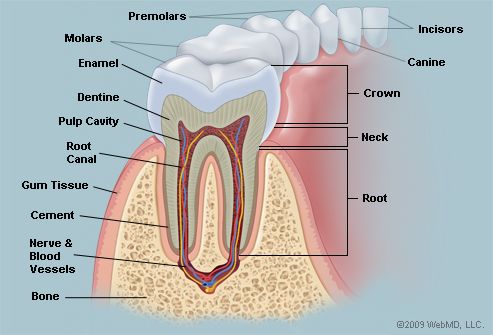
What are the parts of the tooth?
  • Crown: the exposed portion of the tooth covered by enamel that sits above the gumline
  • Root: portion of the tooth that secures it in place in the gum tissue and bone
  • Enamel: hard covering of the crown that protects the dentine
  • Dentine: living supportive part of tooth that has some nerves
  • Pulp: tooth center which houses many nerves and blood vessels; part of the tooth that receives nourishment
  • Cement: covers root and attaches tooth to the bones of the jaw


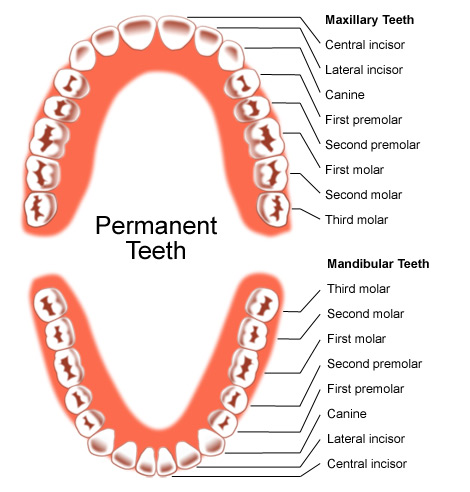
Since humans eat a mixture of meat and plant products, our teeth have incisors, canines, pre-molars, and molars.  Paleontologists can determine a skeleton or fossil's species and eating habits  by examining its teeth.


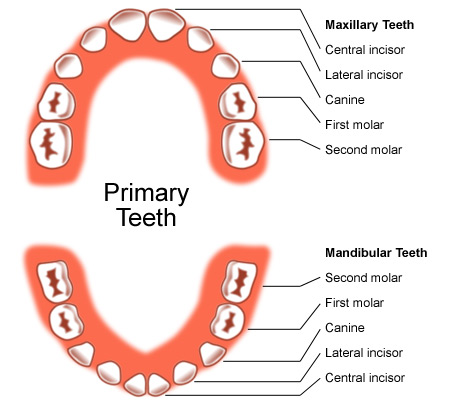
We are diphyodonts.  This means that we have two distinct sets of teeth.  The first set is known as deciduous, baby, milk, or primary teeth.  These teeth typically emerge during infancy and are replaced by permanent adult teeth.  We typically have 20 teeth as children and 32 as adults.


Fun Fact: Walrus tusks are actually canines!  These teeth grow continuously throughout the life of the walrus.


Sunday, May 26, 2013

National Smile Month


We're in the middle of National Smile Month!  Get the kids involved with fun.  They have a few fun games including a dental themed Shoots and Ladders, rhymes, and recipes.  Find them at: http://www.bda.org/Images/children-oralhealth-slideshow.pdf

Below is an infographic from their website


What's that Word? Dental Jargon from A to Z: V is for Veneer

Dental veneers are composite or porcelain layers that are overlain onto a tooth in order to improve the tooth's appearance.  They can lengthen and whiten teeth, making them appear straight, young, and healthy.  Veneers can result in dramatic dental transformations or the correction of the appearance of dark spaces following gum recession or the changes that result from a fractured or misaligned tooth.


Dentist Charles Pincus created the first veneers, which were used by actors to temporarily enhanced the appearance of their teeth.  They were secured using denture adhesive.  Now, they last for years and are more permanently attached to the enamel.


Now, both porcelain and composite materials are used to create veneers.  In choosing which compound to use, patients should evaluate the life of the material, the whiteness they wish to achieve, and how much dentition is lost by bonding the veneer.  Composite veneers can be fitted in a single visit to the dentist.  Porcelain veneers are more durable than composite veneers although they require the removal of less natural enamel.  They can last 10-15 years.  They also create a more natural look and are more stain-resistant.  Unfortunately, porcelain veneers can only be created in a dental lab, requiring multiple visits to the dentist.  They are more expensive because porcelain is a more expensive material and the process of putting porcelain veneers into the mouth is more time-consuming.


The use of veneers can result in the destruction of a significant amount of enamel so they are not recommended for young patients or patients with minor aesthetic concerns.


What's that Word? Dental Jargon from A to Z: W is for Whitening


Whitening is a treatment where a dentist uses a solution to increase the brightness of teeth.

Whitening regimens should always be supervised by a licensed dentist.  Talk about whitening with your dentist and dental hygienist before you begin the process. 

It's also important to set whitening goals so you don't go overboard and damage the enamel of your teeth. 

Whitening toothpastes, which are more abrasive than normal toothpastes, should not be used by anyone with sensitive teeth.  If you develop sensitivity, whitening might not be for you.

What about whitening without using whitening products?
1.) Try drinking less coffee and tea.
2.) Drink anything that isn't water with a straw. 
3.) Brushing and flossing regularly can help you maintain a pearly white smile.
4.) Adding ingredients such as baking soda to your dental regimen can whiten your teeth.


Saturday, May 25, 2013

What's that Word? Dental Jargon from A to Z: I is for Impression


An impression results in the imprint of teeth and gums, which can be used to make a mold of the dentition and gums.The creation of dental impressions is vital to build dentures, inlays, casts, and implants.  Orthodontists, general dentists, prosthodontists, and oral & maxillofacial surgeons use dental impressions on a daily basis.  


This is a very safe process that has been used for centuries.  The dental impression tray pictured below is currently housed in the Science Museum of London.  It was used in France between 1830 and 1850.